 Americas Rugby News Rugby news from across the Americas!
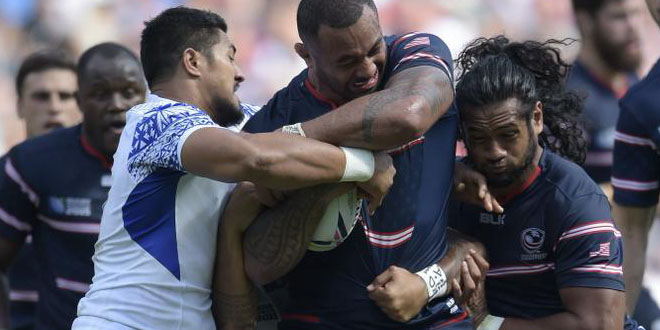
The influx of former New Zealand and Australia internationals switching allegiances to Samoa has rewritten the competitive balance of the USA’s pool for the 2027 Rugby World Cup. World Rugby’s updated eligibility criteria have effectively cleared a path for highly developed, tier-1 talent to bolster secondary nations. For USA tournament planners and pool rivals, this represents a sudden and drastic escalation in the difficulty of navigating the group stage, upending long-term competitive forecasting for the event.
This shifting landscape hits home immediately, as Samoa has received a massive talent injection for their November 2026 international test tour, calling up a wave of high-profile former All Blacks and Wallabies defectors into their 30-man squad.
This aggressive roster-building sends immediate shockwaves to 2027 tournament opponents like the United States, who must now contend with an artificially inflated tier-2 powerhouse in Group C. For USA Rugby planners, this sudden escalation in pool-stage difficulty completely alters the competitive math, forcing the Eagles to drastically lift their game on the road to 2027 as they build momentum ahead of hosting their own home World Cup tournament just four years later in 2031.
 THE INSTANT GAUNTLET: UPENDING POOL C AND TIER-2 REALITIES THE INSTANT GAUNTLET: UPENDING POOL C AND TIER-2 REALITIES |
This talent shift hits the 2027 World Cup Group C directly, a pool featuring France, Japan, the United States, and Samoa. With elite Super Rugby and test-level athletes entering the Samoan roster in the prime of their careers, Group C transformed overnight into a brutal gauntlet for the lower-seeded teams fighting for knockout-stage progression.
The immediate reality for international rugby organizers is that the competitive baseline for tier-2 teams has skyrocketed. By integrating high-investment products of the New Zealand and Australian rugby systems—such as Akira Ioane, Shaun Stevenson, and Irae Simone—Samoa has bypassed years of grassroots structural building to field what looms as a formidable tier-2 roster. For the USA Eagles, this strategic shift means the path to a successful campaign in Australia just got exponentially steeper.
 THE HOMEGROWN DISPARITY: SETTING THE STAGE FOR USA 2031 THE HOMEGROWN DISPARITY: SETTING THE STAGE FOR USA 2031 |
The strategic movement of elite talent reached a tipping point during the 2023 Rugby World Cup cycle, as multiple veteran All Blacks and Wallabies officially defected to Samoa under the relaxed eligibility rules. This initial high-profile wave was led by former Australia playmaker Christian Leali’ifano (26 caps for the Wallabies), along with decorated former New Zealand internationals Charlie Faumuina (50 caps), Lima Sopoaga (16 caps), and Steven Luatua (15 caps).

The stark disparity of this system was illustrated by Leali’ifano (shown above), who represented Australia against Uruguay at the 2019 Rugby World Cup, only to switch allegiances and start for Samoa against Chile at the 2023 tournament. While Samoa benefits exponentially from inheriting these highly polished products of tier-1 development systems, other tier-2 nations like Georgia, Uruguay and Chile are effectively punished for playing by traditional rules, forced to compete with entirely homegrown rosters against a Samoan side fortified by tier-1 defectors.
 THE LOST AMERICAN: SAMOA’S RAID ON A TIER-2 RIVAL THE LOST AMERICAN: SAMOA’S RAID ON A TIER-2 RIVAL |
The structural damage caused by World Rugby’s updated eligibility rules is not confined to Tier-1 nations losing secondary talent; it has enabled the predatory poaching of critical assets between Tier-2 rivals. There is perhaps no greater indictment of this system than the case of Titi Lamositele, a player who is 100% homegrown American rugby talent. Born and raised in Washington state, Lamositele was completely developed within the United States rugby pathway, ascending to become a foundational cornerstone of the USA Eagles’ front row and representing his country with pride across multiple Rugby World Cup campaigns.
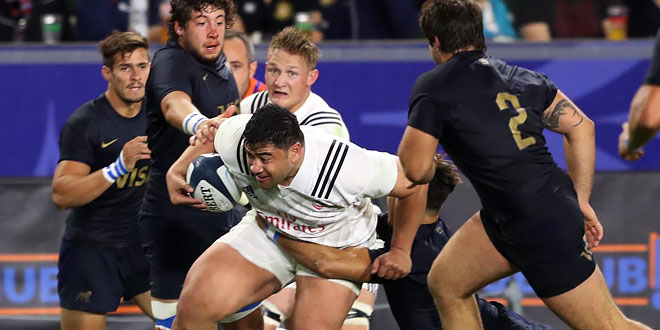
Samoa’s acquisition of Lamositele delivered a catastrophic, direct blow to USA Rugby’s competitive ambitions at the worst possible moment. His sudden absence from the national setup during the critical Rugby World Cup 2023 qualifying cycles completely dismantled the technical stability of the Eagles’ scrum. This critical deficiency in set-piece power directly contributed to the USA failing to qualify for the tournament in France, most notably culminating in a draw against Portugal. While Samoa fortified its own ranks, the USA was left vulnerable, stripped of a world-class homegrown prop.
This high-profile defection underlines the structural flaws of World Rugby’s legislative shift. By altering the laws to allow players to switch test allegiances based on heritage, the governing body has not leveled the playing field; it has sanctioned the stripping of resources from developing rugby nations who play by traditional rules. Samoa did not just absorb an aged-out All Black or Wallaby looking for an international swan song—they openly poached a homegrown talisman from a direct Tier-2 competitor. This sets a dangerous precedent where vulnerable nations who invest heavily in grassroots development can have their finest homegrown products legally confiscated by rivals with deeper heritage ties.
| THE ROAD TO 2031: REBUILDING THE AMERICAN BLUEPRINT |
The loss of Lamositele and the general inflation of the Samoan roster forced an immediate realization upon USA Rugby administrators. It proved that the United States can no longer rely on a traditional, slow-burning domestic cycle if they hope to be competitive on the world stage. Instead of merely complaining about the systematic loopholes exploited by their rivals, American planners are now under immense pressure to aggressively overhaul their high-performance pathways, secure their homegrown talent, and rapidly lift the Eagles’ standard of play to survive the heavily altered tier-2 landscape.
This controversial roster-building strategy will face its ultimate test at Rugby World Cup 2027, which serves as the final Men’s Rugby World Cup before the United States officially hosts the tournament in 2031. The upcoming global showcase represents the last high-stakes testing ground for secondary nations to refine their strategies before the sport moves to American soil.
For USA Rugby planners, tracking the impact of these tier-1 defectors is critical, as the competitive landscape established at this tournament will directly dictate the ticketing, broadcasting, and commercial pressures facing the Eagles when they welcome the rugby world in 2031.
 NEW ARRIVALS: RETURNING HOME OR DEFECTING TO SAMOA? NEW ARRIVALS: RETURNING HOME OR DEFECTING TO SAMOA? |
| Player | Former Tier-1 System | Background / Status | Homegrown? |
|---|---|---|---|
| Akira Ioane | New Zealand (All Blacks) | Born in Auckland; product of Auckland Grammar and NZ U20. | No |
| Shaun Stevenson | New Zealand (All Blacks) | Born in Auckland; product of Auckland schools and Chiefs academy. | No |
| Josh Ioane | New Zealand (All Blacks) | Born in Auckland; developed entirely via Otago and Highlanders. | No |
| Irae Simone | Australia (Wallabies) | Born in Auckland, moved to Australia young; developed via NSW/Brumbies. | No |
| AJ Lam | New Zealand (All Blacks XV) | Born in Auckland; product of St Peter’s College and Blues academy. | No |
| Etene Nanai-Seturo | New Zealand (NZ Sevens) | Born in Auckland; product of St Kentigern College and NZ Sevens. | No |